Your Sanitarium.FM Account
|
Tomorrow
- 12am - Auto DJ
- 3am - Auto DJ
- 6am - Auto DJ
- 9am - Auto DJ
- 12pm - Auto DJ
Support The Sanitarium.FM! 
Or donate to us via PayPal:
|
|
Sanitarium.FM, where madness is just a way of life.
|
|
 |
It’s said to be the second largest computer expo in the world; and regularly attracts key manufacturers both in its local Taiwan and worldwide. Today, the 2014 edition of COMPUTEX Taipei kicked off; and as you may have expected, some cool technology was shown off. Much of the action today was dominated by ASUS, who were later followed by Acer – Taiwan’s two main computer and smart phone manufacturers and a mainstay of the expo; with Dell taking centre stage in the dying minutes to reveal two new Inspiron Tablets. Grab a coffee and read on for all of today’s news.
Skip to Announcements from: ASUS – Acer – Dell
ASUS
The show itself started with ASUS taking the stage, five minutes later than planned due to the late arrival of some members of the assembled press. As is typical with ASUS, however, the news came thick and fast. Just three minutes into their keynote conference, we were introduced to the ASUS ZenBook NX500, a laptop described by Shih as being “perfect for the ultimate professional”. The new ZenBook has a UHD panel, delivering a crisp 3840×2160-pixel screen resolution; and combines it with ASUS’ VideoMaster display technology which, so they claim, makes for “true to life” colours. It also has a fourth-gen Intel Core i7 and NVIDIA GTX 850, and supports the latest PCI-E SSDs and 802.11ac Wi-Fi standards.
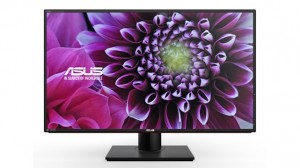
Speaking of UHD panels, ASUS also revealed a 32-inch UHD ProArt monitor – the PA328Q. It’s designed for imaging professionals, and has all the latest ports like HDMI 2.0. A brief mention was given to the Transformer Book Flip, a previously revealed product that’s basically a laptop whose screen can bend all the way back to behind the keyboard to allow it to be used as a tablet. ASUS then took a brief detour to show us a new Wi-Fi Router, the RT-AC3200. Capable of speeds of 3.2Gb/sec, it may be the world’s fastest router to date.
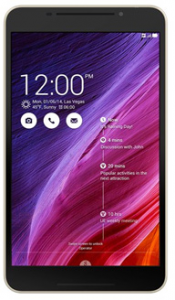
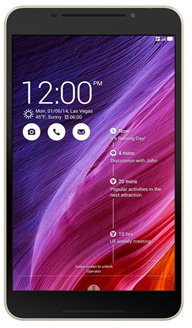
Just ten minutes since their keynote started, and already we’ve moved on to smart phones. With a claimed 72-per cent screen to body ratio, the ASUS FonePad 8 – the company’s next addition to their range of really big smart phones – is “designed to maximise your viewing experience”, so says chairman Jonney Shih. Interestingly, it’s planned to be released in 7- and 8-inch varieties, but the company already has a FonePad 7 – will this device supersede it? But these aren’t the only devices ASUS is planning to release in 7- and 8-inch versions. ASUS are planning to refine another of their products, the MeMoPAD HD7, with a thinner, lighter profile and a choice of 7- and 8-inch screen sizes. The 299g, 7.45mm-thin ASUS MemoPAD 8 is new too — it has an 8-inch screen as you’d expect, with Full HD resolution. It’s 1920x1200pixels, which means it’s a 16:10 ratio panel. It uses an Intel quad-core Atom Z3580 processor running at 2.3GHz. It’s the most powerful and beautifully designed 8-inch LTE tablet out today, apparently.
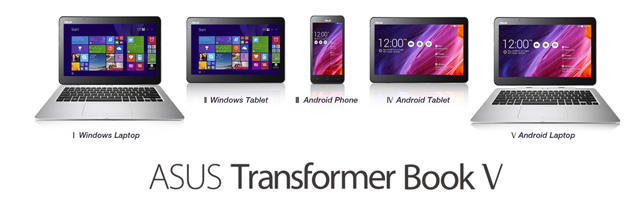
ASUS has often tried to combine phone and tablet with their FonePad and PadFone lines, but perhaps the biggest news is they feel this is only the beginning. In their words, the “ultimate convergence” of devices would be a device that combines Android Phone and Tablet along with a Windows Tablet and Windows and Android laptops. That’s apparently the plan for their boldest device revealed yet, the Transformer Book V. A full HD IPS phone slots into the back of an LTE-capable tablet with a 12.5-inch screen. This then slots into a laptop keyboard dock with a 1TB hard drive, turning the tablet – phone still inside – into a full-power laptop. A single button press on the keyboard switches the device from Android to Windows 8.1, after which the screen can be undocked and used as a tablet, or kept in place for a laptop. When you’re done, remove the phone out the back of the tablet and you’re back to an Android phone and on your way. Now THAT’S a bombshell!
Back to top
Acer
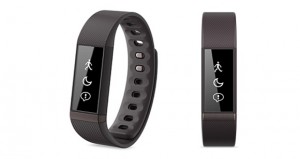
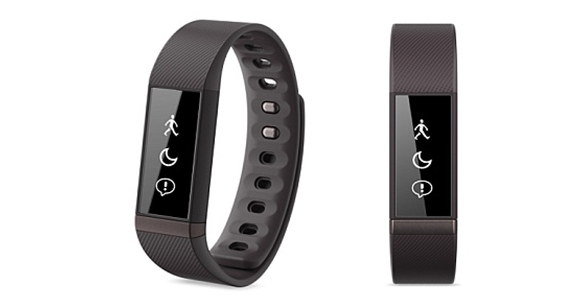
After Samsung’s announcement earlier this year of plans to launch two new wearable, electronic fitness devices, 2014 seems to be the year of fitness wearables – and Acer’s first announcement today was to let us know the choice of devices available is only set to grow. The company announced the Acer Liquid Leap, a fitness armband with a 1-inch display, which will also be capable of call and SMS notifications.
Acer also revealed its new line of Liquid brand mobile devices, comprising four different smart phone models as well as one new tablet. One of these, the Acer Liquid Z200 smartphone, is already being referred to by some members of the press as Acer’s attempt to compete with Motorola. Expected to retail at just €79, has a modest 4-inch display; and will be available in a choice of five colours: Titanium Black, Essential White, Fragrant Pink, Sky Blue and Sunshine Yellow.
As for the other models, here’s a quick bullet-point summary:
- Acer Iconia Tab 8 tablet – 8in 1920 x 1200 IPS display, quad-core Intel Atom processor, “sleek” metallic finish, 7.5 hours of battery life “for uninterrupted multimedia enjoyment”, dual speakers
- Acer Liquid Jade smartphone – 5in HD display with Gorilla Glass 3, 13MP rear camera, KitKat Android 4.4
- Acer Liquid E700 smartphone – 5in HD IPS display, 3,500mAh “never-ending” battery offering 60 days standby or 24 hours talk time, quad-core processor, 16GB internal storage, 2GB of RAM
- Acer Liquid E600 smartphone – 5in IPS display, quad-core processor, 8MP rear camera, 4G-LTE compatibility
Back to top
Dell
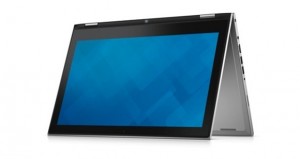
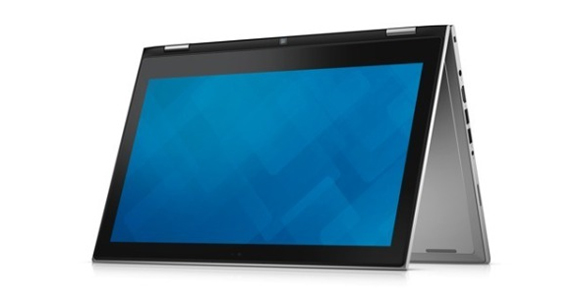
When the Lenovo Yoga released and showed off its super-tiltable screen, which allowed it to be suspended in a number of positions or even have the screen fully folded back to use as a tablet, it seems the concept was popular enough to spawn a number of imitators – and now Dell has thrown one of its own into the mix. The Dell Inspiron 13 7000 is a great-looking convertible laptop, but sadly little is known so far of the specs – we’ll have more as its revealed.
But if you prefer an actual tablet, Dell had an announcement there too. The new Dell Inspiron 20 is an upcoming tablet that supposedly will last six hours on a single charge, but maybe someone should tell the company that bigger isn’t always better – sporting a sizeable 19.5 inch display, this tablet isn’t going to fit into anyone’s coat pockets any time soon – in fact many laptop bags would struggle to contain it – but it is handy for moving from room to room, and watching your favourite films wherever you want to sit in the house. In fact, perhaps standing it up and using it as a TV replacement isn’t actually too far-fetched, given the powers of on-demand TV, Chromecast and so on…
Back to top
That’s all for today – tune in tomorrow for the next instalment of COMPUTEX action!
June 2nd, 2014 by CrimsonShade |
| Posted in General, Technology | No Comments » |
|
The Microsoft Surface tablets live a troubled existence. Ostensibly tablet devices designed by Microsoft to show how Windows 8 (and later 8.1) are designed to work on a Tablet, the devices originally came with; then later made optional a series of Covers (such as the Touch Cover and Type Cover) that added physical keyboards to the mix. Combined with the tablets featuring a kickstand to keep the screen upright, it often felt more like Microsoft were actually aiming to build hybrid devices – laptops with a removable screen that just HAPPENED to be usable as a tablet – rather than tablet devices in their own right.
The Surface Pro 3 takes it even further.
Microsoft’s belief is that up until now, tablets and laptops have been mutually exclusive devices, suiting different use cases. Unveiled today at a purpose-built event at New York City, Microsoft say their next entry to their Surface line of tablets is designed with one particular purpose in mind – to bridge that gap. So no longer is it enough to sell tablets with enough optional accessories to be usable as laptops – Microsoft’s new goal is to have their tablet replace your laptop entirely.
In order to achieve that goal, Microsoft first started by upping the 10.6-inch screen – as seen on the Surface Pro 2 – to 12-inches, or one whole foot wide. The display also comes with a 2,160 x 1,440 resolution, topping traditional 1080p HD displays on the market. The combination leads to a 4:3 viewing ratio – the same as a typical TV before Widescreen became commonplace – which Microsoft says is “critical” to compete with a typical laptop screen.
Despite the enlarged screen, Microsoft also seems to be committed to making the overall device smaller and lighter to use. At 9.1mm thick, the Surface Pro 3 shaves a millimetre-and-a-half of thickness from the Pro 2; while it weighs just 800g. The lightness of the tablet was demonstrated by placing it on a pair of scales with a MacBook Air on the other side, demonstrating it to be lighter than Apple’s famously ultra-thin laptop in a thinly-veiled dig towards one of the biggest players in the Tablet Computing market.
But if Microsoft really want to make this a laptop-killer, it needs the power to match. For this, Microsoft is equipping all the Surface Pro 3 tablets with Intel Core processors (more on that later), not only improving the power of the tablets beyond that of previous Surfaces, but also pushing it into the realm of – yes, you guessed it – your typical medium- to high-end laptop. Microsoft ran a number of high-end apps; and even a 3D-rendering app on-stage during the presentation to prove its capabilities. Adobe also came on-stage to show off a new version of Photoshop, “specifically optimised” for the Surface Pro 3, which even has 200% bigger icons to make it work equally well when touched with a stylus or with fingers. Adobe claim that the updated app also contains an enhanced feature set that has been made possible with the power of the new device.
Microsoft will release the Surface Pro 3 in three flavours, offering different Intel Core processors – the i3, i5 and i7 in order of power – to allow users to compromise between performance and price. All of them will sport a number of USB 3.0 ports and a redesigned kickstand, which rotates between angles starting at the standard 22 degrees up to 150 degrees – a departure from the fixed viewing angles of the previous two iterations. They will also come with Microsoft’s popular Type Covers in multiple colours.
While the devices hit stores in America on Wednesday, global release plans and price points are not yet known. Taking the American prices, however, the entry level i3 device – with minimum storage and RAM included – will cost $799; the equivalent of £480 here in the UK. Customers who want an Intel Core i5 will need to dish out $999 to $1,299 (roughly £590 – £770) depending on Storage and RAM, and the most priciest i7 model – with the full 512GB of storage and 8GB of on-board RAM – will set you back over a grand in our money, with the US price of $1,949 equating to over £1100 this side of the pond. We hope to have news on the European launch dates and price points as soon as they become available.
May 20th, 2014 by CrimsonShade |
| Posted in General, Technology | No Comments » |
|
We’ve known about it since February, but finally, D-day (Deactivation Day) has arrived for online services on Wii and DS games. At some point in the next 24 hours, Nintendo is turning off the Nintendo Wi-Fi Connection Service as used for Wii and DS games. This means you’ll no longer be able to use the WiFi on Wii and DS to play those games online, download new content, or access leaderboards.
That means no more Mario Kart DS races; no more Professor Layton downloadable puzzles; no more online Multiplayer in Super Smash Bros. Brawl or the original Monster Hunter 3. And while it was originally suggested that DSi-enhanced games would not be affected, this seems to have been wishful thinking, as even Pokémon Black and Pokémon White and their sequels (along with the other DS-era Pokémon Titles) are being disconnected (Nintendo UK’s page about it only lists games with Downloadable Content as being discontinued; the American site is a little more comprehensive, although some titles have different names between regions).
While the games will no longer be playable online or be able to receive downloadable content, local Wireless is unaffected – so you can still wirelessly race, battle, puzzle against or otherwise play with your mates within a ten-metre range; and use Download Play if your game offers it. The games will also continue to have all their offline play features. Meanwhile, Pokémon fans worried their Pokémon collections from Generations 4 or 5 are permanently locked to stay in that generation need not worry – using a 3DS, it’s still Possible to move Pokémon from some DS Pokémon Titles to the Pokémon Bank and then to Pokémon X and Y, thanks to the Poké Transfer app for 3DS which remains functional.
Online services that do not use Nintendo WFC, such as Netflix and Youtube apps, also remain functional on their respective devices (for as long as the companies behind those apps continue to support the Wii or DS, anyway); and Internet Browsing is still also possible. Meanwhile the Wii Shop Channel is also remaining up and running for the moment, so WiiWare and Virtual Console games can still be downloaded, gifted and so on. Even so, it’s clear where the real focus of online for Nintendo is now – Wii U, 3DS, and the Nintendo Network, all of which will continue their normal lives long after their predecessors are cut off later today.
May 19th, 2014 by CrimsonShade |
| Posted in Gaming, General, Nintendo, Technology | No Comments » |
|
Say what you want about a massive retail chain releasing an own-brand Tablet, but when that Tablet sells over half a million units in one year, clearly you must be doing something right. But while the Hudl tablet may have been very successful for massive retailer Tesco – enough so that a sequel is planned for later this year, in fact – it hasn’t all been plain sailing.
An unusual glitch that causes the screen to go completely unresponsive in certain situations has caused the store to have to replace a significant number of tablets under warranty. Over the last few weeks, Tesco have been hard at work to discover a cause for this issue; and eventually narrowed it down to a faulty piece of code responsible for managing the screen’s sensors. As a result, it’s rolling out an Android update to fix the issue for any tablets still affected.
Tesco say that some updates have passed Google certification and are already hitting affected Hudls, but it could take up to three weeks for the fix to reach everyone. So if you’re using a Hudl and finding it to stop working every now and then, hold fast – you’ll soon be back to working order without the hassle of a return.
May 14th, 2014 by CrimsonShade |
| Posted in General, Technology | No Comments » |
|
When Popcorn Time first hit Windows PCs, Hollywood was a picture of fear and anger. Here was a service designed to find torrents of all kinds of movies past and present; and make pirated copies of movies available for FREE – and worse, they were open-sourcing the project! Hollywood eventually took down the original code and jailed the person responsible – but not before other people grabbed the code and forked it, creating similar software and projects of their own. And now, Popcorn Time is going mobile.
That’s because on the project’s most popular forks, Time4Popcorn, have released an Android app online. Sporting the same look, feel and selection of films as the desktop version, Time4Popcorn’s app is only recommended for those with generous data plans; as it also streams the films from torrents rather than offering them directly. Some elements of the Android interface are still quite low-res compared to the Desktop version and there are UI elements that don’t work yet, plus some films have a noticeable delay before they start playing due to the availability or speed of the torrent process.
Naturally, with movie piracy being a criminal offence, Google were not at all pleased to see the Android app released. While Time4Popcorn apparently submitted the app to the official Google Play store, don’t expect to find it there yourself, as Google removed it on the grounds of “theft of intellectual property”. As a result, it can only be downloaded from Time4Popcorn’s website.
If this hasn’t put you off using the new App, however, there might be an even BIGGER reason to urge consumers to avoid it. The Time4Popcorn app’s functionality is mainly served by a centralised server, which makes it vulnerable both to takedown attempts by legal bodies or angry hackers; as well as opening the potential for malware to be distributed through it. Indeed, some users allege that the app contains malware already – although this does not seem to be the case, as the developers of the app makes its source code public and no dangerous code has been found within. Whatever the case may be, the point is that by utilising this single central server approach – which is also used by the Desktop version – Time4Popcorn offers no safety net and no guarantees as to the availability, safety and security of the service, should anything happen to that server in the future. You use it at your own risk.
Just like on Windows, however, the open-source nature of Popcorn Time means it may only be a matter of time before a second Android version is released; and there’s even been interest in building it for Chromecast. Perhaps this is the sad fact of piracy – it continues to evolve and grow even as it gives the finger to the very organisations by which it harms, yet whom without which it would cease to exist.
May 13th, 2014 by CrimsonShade |
| Posted in General, Technology | No Comments » |
|