Our live radio broadcasts are currently on hiatus while we work on improvements to Sanitarium.FM's core services. For further information, visit our Discord.
For five years, World Wrestling Entertainment (otherwise known as WWE) has been hard at work developing the “WWE Network” – a TV Network owned by the WWE which would host exclusive content – such as non-wrestling shows made for the network that feature its “Superstar” talent – as well as becoming the official platform by which its Pay-Per-View wrestling shows would be distributed through in the future.
Starting February 24th, 2014, residents of the United States will finally be able to enjoy the fruits of their labour, when the WWE Network launches online. For $9.99 a month, subscribers will get access to the 12 WWE pay-per-view events WWE produces annually, starting with this year’s WrestleMania – WWE’s most popular Pay-Per-View. The Network will also broadcast future episodes of NXT – its wrestling promotion that showcases fresher talent with the aim of turning one or more of them into full WWE Superstars by the end of each season – as live TV shows for the first time; and will also host brand-new shows exclusive to the network and archive footage from the yesteryears of WWE, WWF, WCW and ECW.
A screenshot of the WWE Network Playstation App. The WWE Network will hit PC, Playstation, Xbox and Roku TV Boxes (see below)
Originally, the plan for the WWE Network was for it to be an independent cable network people could sign up to and receive like their existing TV Network, but this was shot down. WWE Chairman Vince McMahon then toyed with the idea of making the network a pay-TV channel like HBO. The idea would have been that existing TV Networks could licence the WWE Network from them and then offer it as an additional channel to their own customers for an additional monthly subscription. McMahon said WWE had deals ready to go with major distributors for a network that would have generated fees of 20 cents per month, per subscriber; but this cost and the terms of the deals being offered by the distributors were “too restrictive”; and he walked away.
“I said, much to the chagrin of my staff, I’m not going to sign it.”
– Vince McMahon
Instead, the WWE looked at how Netflix was able to create an OTT service and became convinced that its own rabid fan base would embrace a similar approach. “Our fans are early adopters of new technologies,” McMahon said, adding that the service will need about a million subscribers to break even. Michelle Wilson, WWE’s chief revenue and marketing officer, added, “This gives us control of our destiny and a better user interface … We think this is the future.”
So, the new WWE Network will be an online, “Over The Top” TV Network, which will be available online in your browser, or through specially-made WWE Network apps hitting Playstation, Xbox and Roku TV boxes. United States subscribers will have access to the Network via their chosen device for free between February 24th until March 2nd as a one-week trial to celebrate the Network’s launch, which will include one live NXT Episode.
While WWE are still quiet on when other territories will receive the Network, the company has stated that they plan to expand its reach further “by year’s end”. With the United Kingdom being WWE’s second biggest-selling territory, we highly expect an announcement for a UK launch in the next few months 🙂
Oh Toshiba… anything they can do, you can do better, is it? While other companies announce laptops with 2,560 x 1,440 screens, Toshiba is one-upping everyone by showing off the Satellite P50t, a notebook computer with a 15.6-inch, 3,840 x 2,160 display. That also gives it a screen density of 282 pixels per inch – which is 294% more pixels than the standard 96DPI most Windows set-ups are catered for and thus results in some VERY small icons indeed. It’s unlikely you’ll appreciate the extra screen density for a while too given a distinct lack of Windows software or apps designed for such high resolution screens — but then this is a problem for high-res as a whole, not the laptop itself. Colours really pop however, and Toshiba have seen fit to ensure the screen is well-built enough to offer a range of viewing angles. The laptop is also planned to have a mix of Core i5/i7 processors, but nothing else is yet known specs-wise. We suppose all will be revealed when this finally goes on sale – which Toshiba tells us should be “sometime mid-year”.
The BBC’s Connected Red Button service promised a new level of interactivity when it launched in the UK a year ago. Combining the usual Digital Red Button service with the internet, supported devices would be able to take advantage of such additional services such as recommended viewing (curated by actual, real-life humans) and alternative streams during live sports events; while classic services such as news and weather reports could be seamlessly overlaid over a TV program.
However, despite BBC promising to extend Connected Red Button to more platforms over time, until now it has remained an exclusive feature of Virgin Media’s TiVo boxes. Now though, it seems BBC are finally making good on their promise. After some early roll-outs to certain Sony smart TVs before Christmas, BBC have now announced that as of today, owners of Samsung and Sony smart TVs should both have access to a beta version of the service when they press the red button on their remotes, with models from LG joining them in due course. In fact, the BBC have now released a very large list of Connected Red Button TV models for people to find out if theirs will be included.
Now, how about that Freesat, Freeview or YouView standalone set-top box support, BBC? You were supposed to roll that out last year…
When 19-year-old Canadian Simon Tian took to Kickstarter with the aim of designing and funding manufacture for a new Smartwatch, he took an approach that’s the opposite of many Smartwatches today. Rather than starting with a basic timepiece and add features until physics or the budget got in the way, Simon started with a previous-generation smartphone and asked himself, “just how much of this can I shrink down to a watch-like size?” It might sound crazy, but considering that the Pine raised eight times its goal on Kickstarter, there’s clearly a desire for this sort of hardware – and the final model was shown off at CES 2014 earlier today.
Now in all fairness, calling this new device – known as the Pine – a watch is a bit of a stretch, as it’s much larger than your typical timepiece – for one thing, the 320×240 pixel-resolution TFT Screen is 2.4 inches wide. Imagine something the size of a deck of cards that’s strapped along your wrist and you’re almost there. As for the “phone” part of this weird hybrid, there’s a micro-SIM card slot, speaker phone and forward- and rear-facing cameras. The forward camera is VGA quality and good enough for video calls, but you’ll need to remove the device from your wrist to use the better-quality rear camera.
An example of that front camera in action (image courtesy DesignBoom)
The Pine comes equipped with a 1.2GHz Snapdragon S4 paired with 512MB RAM, which is half of the RAM of most smartphones today; but enough to play Rovio’s plague of the smartphone era, Angry Birds, perfectly without any lag or jitter – and that’s all anyone REALLY does with their smartphone, right? Because of the size of the display, it’s entirely possible to use a full-size software keyboard, so you could theoretically also use this for emails and calls, but probably not very comfortably. In fact, it’s hard to imagine this device being comfortable to wear for long periods at all, but there are always those who are prepared to sacrifice a little comfort in favour of having full smartphone functionality attached to their wrist. If you’re one of them, the Pine is planned to hit stores in the US in March; and will be available in two flavours. The 16GB edition will cost $335 and the 32GB edition will set you back $395.
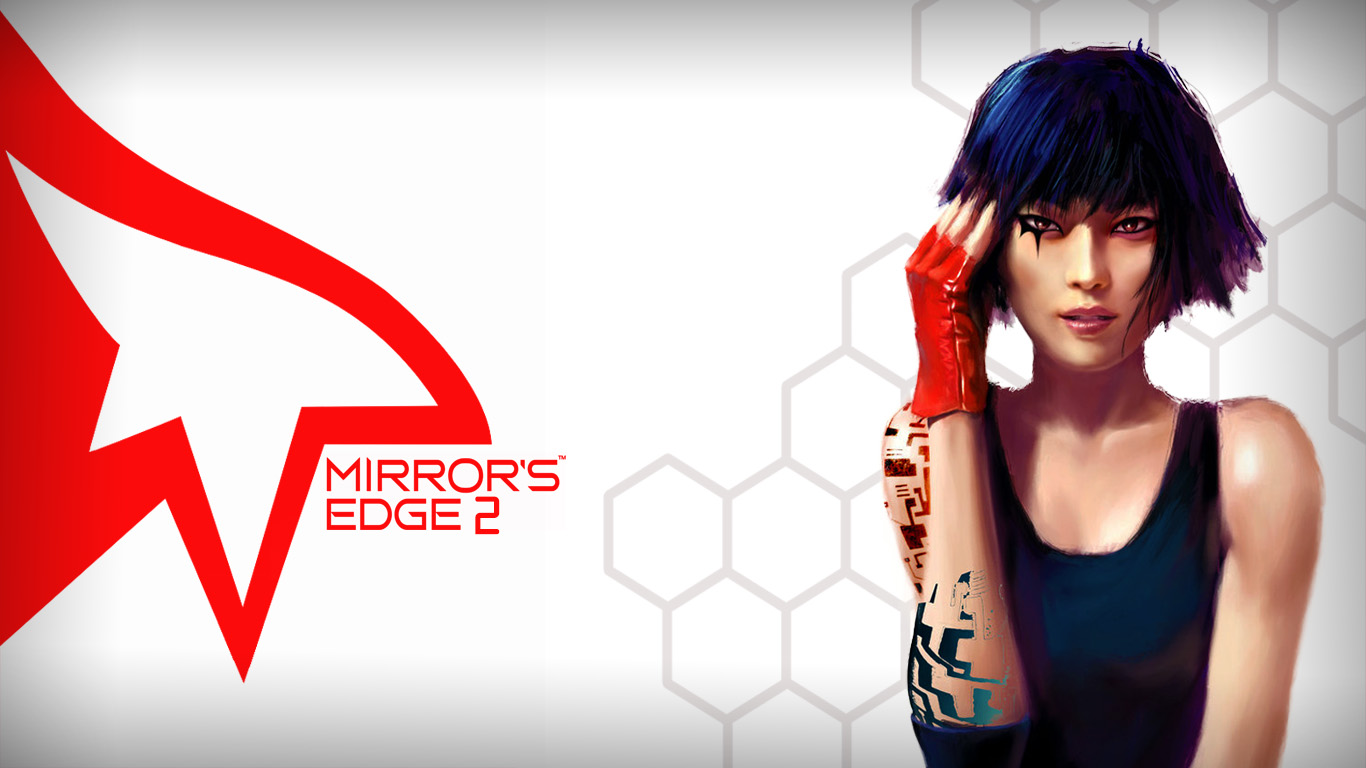
Mirror’s Edge was an interesting title that didn’t quite work, so when EA’s Patrick Söderlund stepped forward in June last year and said a sequel was always going to happen, it came as a slight surprise to the rest of us. But even if Mirror’s Edge 2 is on it’s way, Rhianna Pratchett, who wrote the first one, isn’t on board. She’s a self-described “casualty of that [Mirror’s Edge] development process,” and wishes the new team all the best.
“Go with God, I say,” she Tweets. “Create cool stuff. We always need more of that.” When Pratchett came on the team, Faith was nothing more than a template; Pratchett created the character, and continued her adventures in the DC comic book version. Oddly enough, the comic was a prequel, and so is Mirror’s Edge 2, but that doesn’t seem to make a difference to EA; presumably the comic isn’t canon.
Pratchett’s sanguine about the whole thing. She knows she’s just hired help, and nobody from the studio’s talked to her in years, so she gave up on that possibility a while ago. “It was a difficult project for all,” she Tweets, “and I no longer have any contacts [at DICE].”
EA’s open-world Mirror’s Edge 2 adventure hasn’t got a release date yet, but when it does come out it will be for PC, PS4 and Xbox One.